

Actively influence brain waves
What is neurofeedback?
Neurofeedback, also known as EEG feedback or EEG biofeedback, is a special form of neurofeedback. Biofeedbacks, in which clients are given feedback about their own brain activity. The aim is to consciously influence and control this brain activity.
Clients learn to actively influence and control the body's own functions (in this case brain waves). On this page you can find out everything you need to know about this fascinating method.
OPERANT CONDITIONING
How does neurofeedback work?
Neurofeedback works in a similar way to biofeedback: clients sit in front of a screen and observe their brain functions, which are recorded by a neurofeedback device. By experiencing and understanding the effects of different strategies on these functions, clients learn to train their brain waves in a targeted manner.
The neurofeedback device records EEG waves (brain wave curves) and breaks them down into different frequency bands. The strength of these frequency bands depends on the client's attention and state of consciousness. For example, the beta band is particularly strong during focussed attention (see section „Frequency bands“).
Through feedback on the screen, clients are trained to consciously control the activity of certain frequency bands. Neurofeedback is based on the principle of operant conditioning, in which positive feedback reinforces the desired behaviour.
In practice, this can mean, for example, that a child listens to a fairy tale story during the neurofeedback session, which continues whenever the desired frequency band activity is reached. This unconsciously reinforces the desired behaviour.
The neurofeedback model is closely related to the concept of neuronal dysregulation. Here it is assumed that many central nervous disorders are caused by dysregulation of cortical structures. The aim of neurofeedback is to treat this dysregulation through targeted training.
Recording and training
In neurofeedback, frequency band training is often used, which focuses on the targeted influencing of the individual EEG frequency bands. Here, certain frequency bands are either increased or reduced, depending on the therapeutic goals and the specific disorder. For example, in ADHD, activity in the beta band is often increased and the theta band reduced.
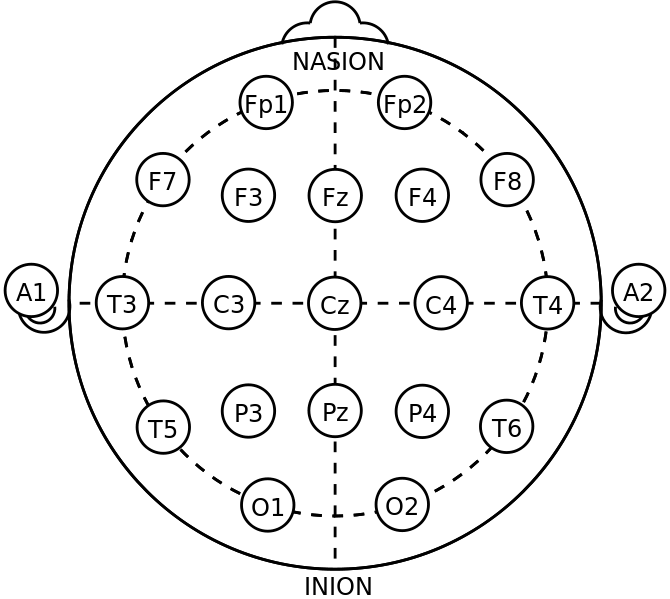
The EEG signal is recorded by electrodes on the scalp. This raw data is broken down into different frequency bands by the neurofeedback system.
Other variants of neurofeedback include SCP training or Z-Score.
Delta waves
Delta waves are the slowest brain waves and occur in the frequency range between 0.1Hz and 4Hz. These waves are typical for the (usually) dreamless deep sleep phase. In pathological conditions, however, delta waves can also occur in adults when they are awake.
Theta waves
Theta waves occur in the frequency range from around 4Hz to 8Hz. They are typically associated with conditions such as drowsiness and easy distractibility. In relation to ADHD, studies often show that theta activity is excessive. Therefore, one goal in neurofeedback training is to regulate theta activity.
Alpha waves
Alpha waves are a typical characteristic of a relaxed but alert state. They occur in the frequency range of around 8 Hz to 12 Hz, mainly when the eyes are closed. If the eyes are opened or a cognitive task is performed with the eyes closed, the alpha waves are replaced by beta waves.
Beta waves
Beta waves are signals in the frequency range from 12 Hz to 30 Hz, which primarily occur in a state of conscious active concentration and information processing. However, the occurrence of beta waves can also have various causes. Physiologically, for example, they occur when a muscle is constantly tensed or during active concentration.
The beta band is usually further divided into individual components:
- SMR (13-15Hz)
- LoBeta (16-18Hz)
- Beta (19-23Hz)
- HiBeta (24-30Hz)
Depending on the disorder, it makes sense to train these „lower ligaments“ directly.
Gamma waves
Signals in the frequency range above 30 Hz are known as gamma waves. These waves are associated with very strong concentration or meditation.
Exemplary areas of application
For many of the indication areas listed, sound evidence of efficacy has been provided in the form of controlled studies and medium to large effects have been shown in meta-analyses.
The most common and best-known area of application for neurofeedback is the treatment of ADHD. The aim here is to beta band and reduce the theta band. The aim is to increase concentration and reduce distraction. You can find out more about this topic at „Neurofeedback for ADHD“.
Another well-known area of application is competitive sport. Neurofeedback is used here to learn how to consciously activate those parts of the brain waveforms that are responsible for focus and concentration. You can find out more about this topic here.
More Areas of application Neurofeedback can be used to treat depression, epilepsy, addiction and sleep disorders, for example.
Biofeedback or neurofeedback: what's the difference?
This question is one of the most frequently asked in the course of counselling sessions. This is not surprising, as the two terms are perceived as completely different at first glance.
If you have less time at the moment, let us answer the question straight away: „Neurofeedback is a special form of biofeedback“. It is also used, for example on Wikipedia described.
What is commonly referred to as biofeedback refers to peripheral biofeedback, i.e. the recording of parameters such as skin conductance, muscle tension or temperature. These are all things that are usually assigned to the „body“ complex.
Neurofeedback, on the other hand, is also known as EEG feedback and measures brain wave curves via an EEG. Neurofeedback therefore „only“ deals with the brain.
And these are the most relevant differences. It has simply become common practice to present the two methods in reports, literature and studies as if they were completely different. One theory for the emergence of the linguistic separation would be that there are indications that are primarily treated with EEG feedback. The treatment of ADHD is at the forefront of this. This could have established a certain independence.
Should I use biofeedback or neurofeedback?
It became established very early on that manufacturers either offer systems for peripheral biofeedback or neurofeedback. However, it makes sense to combine the two methods. A larger toolbox offers greater variety to tackle a wide range of problems. Some systems, such as the Neuromaster system, offer both options. This is an advantage both organisationally and financially.
Neurofeedback FAQ
Where can I find a neurofeedback therapist?
Test persons and clients can find a biofeedback therapist in the therapist centre.Database of the European Biofeedback Academy find.
What is the difference between biofeedback and neurofeedback?
Where can I find neurofeedback training?
The European Biofeedback Academy also offers the Biofeedback & Neurofeedback Training university course in co-operation with the Sigmund Freud Private University.
Where can I find neurofeedback devices?
The market for neurofeedback devices has now reached a considerable size. First and foremost, it is important to distinguish between professional devices for therapists, doctors, coaches, etc. and playful home devices. The latter can be suitable as a playful first step or can supplement training in consultation with the professional user, but in our opinion they can never replace it.
The same suggestions apply to the purchase of professional devices as in our list of biofeedback devices.
What are the costs of neurofeedback treatment?
Costs and billing options are (with the exception of occupational therapy in Germany) mostly the same/similar to those of biofeedback. These are between €80 - €120 in Austria and Germany, or CHF 80 - CHF 130 in Switzerland.
Is neurofeedback covered by health insurance?
In principle, you should always ask your health insurance provider whether treatment costs can be covered. Some health insurance companies are now willing to do so.
Where can I find neurofeedback training?
The European Biofeedback Academy also offers the Biofeedback & Neurofeedback Training university course in co-operation with the Sigmund Freud Private University.