


Information for therapists
Advantages of biofeedback
A key question before introducing biofeedback is often: „What are the benefits of this method?“ or „Why should I use biofeedback?“ Thanks to years of experience and extensive scientific research, we can answer this question clearly. Below you will find an overview of the benefits of the biofeedback method.
For even more detailed information, you can download a comprehensive Access articles on the benefits of biofeedback.
Insight
„Stressed out? Not me!“ - I'm sure many of you have heard this phrase before. Clients often intuitively reject stress as the cause of their complaints. The objective-technical approach of biofeedback helps to facilitate this realisation.
Diagnostics and the right path
In a so-called biofeedback stress profile, a diagnostic assessment is carried out to determine the client's individual reaction type.
Biofeedback enables you to quickly identify the most effective approach by allowing you and the client to observe directly on screen which technique achieves the best results.
Sense of Control
Many clients feel that they have already tried all available treatment options. This can lead to resignation and greatly reduce their motivation to try new approaches. They feel helplessly at the mercy of their illness. Biofeedback offers a way to give clients back control.
Motivation
If the client lacks motivation, it often becomes a battle against windmills for users. A common reason for a lack of motivation is the lack of visible success.
Biofeedback devices provide support in this case by objectively displaying even the smallest changes. This feedback signals that progress is being made and motivates the user to continue training.
Progress monitoring
Control is crucial in training to ensure that the methods used have the desired effect.
Biofeedback provides therapists with a tool that enables them to recognise immediate success and monitor progress in the long term. Clients also receive feedback as to whether the path they have chosen is leading in the right direction.
Easy to learn
The biofeedback principle (learning through feedback) is easy for clients to understand. In addition, our software offers indication-specific session templates that provide clients with clear information about the treatment process. This means that clients do not have to deal with a complicated procedure, which positively contributes to compliance.
Playful approach
A major advantage of the method is its playful approach, which has proven to be particularly attractive for all age groups.
Temporal aspect
Biofeedback is generally a short-term method with long-term effects. Most treatments involve around 5 to 15 sessions.
No medication
The biofeedback method is very much in vogue as it is non-medicinal and has no known side effects.
Positive side effects
Biofeedback can help to bring the entire organism into a more relaxed and healthier state. The positive change in the area of the original problem can also improve other areas of well-being. This holistic effect can pave the way for an improved quality of life.
Versatile use
Biofeedback can be easily integrated into your practice in a variety of ways and at the same time offers the opportunity to comprehensively change, improve and expand your work.
The method constantly surprises us with new application possibilities, and our clients often come up with innovative approaches that we had not yet considered in this form. The simple creation of customised session protocols further supports this flexibility.
Business management aspect
Of course, the client's well-being is the top priority when it comes to visualising success. But this principle also offers advantages from a business perspective. If you, as a provider, can make your clients' progress visible, this will be an important reason why they are more likely to choose your practice. Biofeedback clearly sets you apart from the competition.
Joy and a sense of achievement
You will certainly enjoy using the method. It's simply fun to try out a completely new approach, isn't it? Biofeedback is not just a slight modification of existing concepts, but an innovative method with which you can expand your entire range of services. In addition, there is the fulfilling feeling of supporting clients for whom no other approaches have helped so far.
Test subject satisfaction
Biofeedback is a treatment method that meets with a high level of acceptance among clients. A survey in a psychosomatic clinic showed that almost 90% of the test subjects stated that they had achieved a very good or good improvement in their state of health specifically through biofeedback (Rief & Birbaumer, 2011).
The method inspires your test subjects because it Success can see for themselves, which increases their motivation to actively do something for their health.
What do I need for my biofeedback practice?
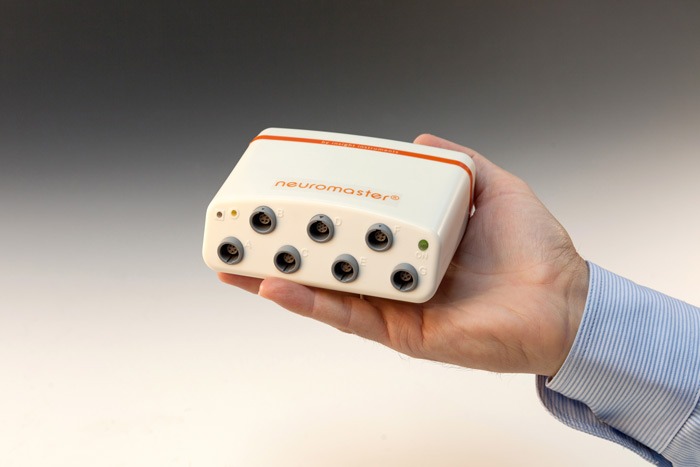
In order to integrate biofeedback into your practice, a biofeedback system is required. Professional, multimodal systems consist of the following components: Device - Sensors - Software.
The biofeedback device
The biofeedback device forms the centrepiece of your system, as it processes the collected data and forwards it to the PC. We use the Neuromaster, a state-of-the-art clinical measuring device that is recognised as a CE-certified medical device. The Neuromaster can be used both as a desktop device and in portable form and enables wireless, USB and memory card operation.
The sensors
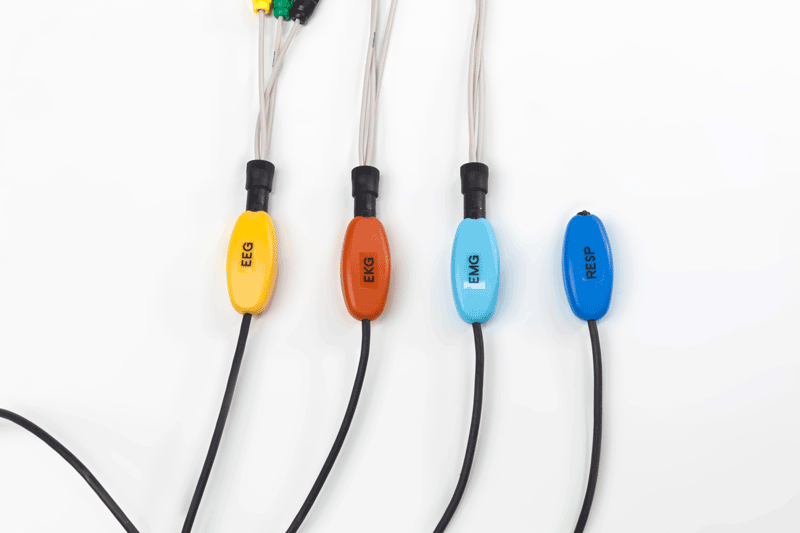
The sensors record the bodily functions of your clients. Different sensors are used for different functions and parameters. We use the innovative Neuromodules, which measure directly in the vicinity of the electrodes and thus eliminate artefacts caused by cable movements.
Up to seven neuromodules can be used in any configuration with the Neuromaster.

The software
The Biolife software is the central area in which you control and manage your biofeedback and neurofeedback training sessions.
Insight Instruments uses its proprietary Biolife software, a Future-orientated multimedia software for biofeedback, neurofeedback and long-term diagnostics for the Neuromaster.
Optional: Training libraries for Biolife
Simply select the appropriate indication and start the training. Each training library offers preconfigured session templates created by experts. These templates make working with biofeedback and neurofeedback much easier!
Optional: Training as a biofeedback therapist
Become a certified biofeedback therapist in just 6 days. You can find all the details on the pages of the European Biofeedback Academy.
Example from a practice
How do I run a successful biofeedback practice? Dr Alois Kogler, who has been running a successful biofeedback practice for many years, investigated this question by observing the processes in his institute over a period of five years. He presented the results at the annual conference of the Austrian Society for Biofeedback.
Here are the key findings:
- Number of test subjectsA total of 320 test subjects (145 men, 175 women) took advantage of biofeedback therapy during this period.
- Distribution according to symptoms:
- 31% suffered from anxiety disorders
- 29% had stress or burnout problems
- 26% complained of pain
- 14% were affected by depression
- Frequently performed treatments:
- Skin conductance relaxation training: 516 units
- Muscle relaxation training: 355 units
- Stress tests: 288 units
- Breathing training: 94 units
Quote: Dr A. Kogler, ÖBFP Annual Conference 2012, Vienna General Hospital
Integration of biofeedback into the practice concept
Although some interested parties are considering opening a specialised „biofeedback practice“, biofeedback is integrated into existing concepts in the majority of cases. For example, biofeedback can also be offered as a supplement to physiotherapy.
It is therefore crucial to know which indications best support biofeedback and neurofeedback in the respective disciplines. In order to impart this knowledge, we have created the series „Biofeedback in...“. This series highlights how biofeedback can be used in different areas and is regularly updated with new topics.
Here you will find an overview of previously published articles on various application areas.
Biofeedback and neurofeedback as a unique selling point
Unique selling points are decisive factors that encourage customers to choose a particular provider from the many options available. With so many healthcare providers offering their services, it is particularly important to stand out - especially in the initial phase when it comes to building up an initial client base.
In this context, biofeedback and neurofeedback can serve as valuable unique selling points. Integrating them into your offering not only provides an additional dimension to treatment, but also sets your practice apart from others. Whilst the professional effectiveness and benefits of these methods have been proven by numerous studies, it is equally important to consider the economic benefits.
Many interested parties often ask how they can earn money directly with biofeedback and neurofeedback. Of course, it is possible to charge for these services separately, either via private payments or possibly via certain health insurance companies. Much more important for most users, however, is the question of how they can gain additional clients for their core services (e.g. physiotherapy, psychotherapy) by integrating biofeedback and neurofeedback.
Example of pain therapy
To illustrate how biofeedback and neurofeedback can serve as a unique selling point, let's look at the example of pain therapy. Pain is a widespread problem and the number of pain therapies available is correspondingly large. Biofeedback offers a clear advantage here: by objectively displaying successes on a screen, therapists can allow their clients to participate directly in the improvement of their values. The visual and playful approach to the method also helps to motivate clients.
This advantage applies not only to smaller practices, but also to large clinics in particular. In the field of rehabilitation and psychosomatics, where the range of services is already very extensive, biofeedback can be a decisive differentiator. In an environment characterised by a high number of providers, the ability to demonstrate success in a transparent and comprehensible manner can make all the difference.
Biofeedback and neurofeedback are therefore not only proving to be professionally effective therapy options, but also as Economically sensible investments. They offer a unique opportunity to set yourself apart from the competition and increase the attractiveness of your own offering.
Financial: Costs and amortisation
Prices for the equipment
Our services are characterised by first-class quality, and we are happy to prove it. Biofeedback and neurofeedback are not only fascinating methods, but also clinically proven procedures with numerous proofs of effectiveness. Nevertheless, the price of the equipment is a decisive factor.
The question of costs cannot always be answered in a generalised way, as our Neuromaster system has a modular structure. This modular structure makes it possible to customise the system according to your individual needs. You can add or omit components depending on which functions you require (e.g. special session templates for children if your practice is geared towards adults). This allows us to provide you with a customised offer and you to purchase only what you really need. At the same time, you can always upgrade the system later if your requirements change.
As a rough guide, you can expect acquisition costs (excluding VAT) of between €4,500 and €8,000.
Please feel free to contact us for detailed advice and a customised quote.
We can help you discuss your specific requirements and find a customised solution. We also offer a Purchase-lease option to facilitate the purchase.
It's worth it! Amortisation of biofeedback
Biofeedback is not only an innovative method, but also an economically attractive investment. Many long-time users report rapid amortisation of their systems:
- 80% of our customers have already amortised the acquisition costs of their system within 4 to 8 months recovered
- More 10% were even able to realise their investment in just 2 months amortise.
- Top users in clinics often reach this point in less than one month, for around 200 sessions.
The basis for this rapid amortisation was a session fee of 30 to 70 euros per hour, with 2 to 10 clients per month.
The magazine „Der niedergelassene Arzt“ (09 - 2015) also reports that biofeedback treatment is also attractive from an economic point of view. This is not only due to the small amount of time and space required, but also to the high level of acceptance among clients.
Field report on the amortisation of biofeedback
Some time ago we received a detailed report from Mr Wilhelm, an experienced speech therapist, on the financial side of the biofeedback purchase. We would not like to withhold this valuable report from you:
Does biofeedback pay off? 07.03.2017
Dear biofeedback enthusiasts,
As I am in a lively exchange with Insight, especially with Mr Stefka, who is always extremely competent, patient and friendly when I have questions / problems, the question of the profitability of a biofedback system also came up during our exchange and whether I could share my experiences here, which I am happy to do.
For me, it's not advertising in the usual sense either, as I don't receive any gratuity, etc. for my „essay“ (except perhaps further patient counselling ;-)). But since I'm always asked the question in the circle of therapists and doctors: „does it pay off“, I think it's important to talk about it, because you don't invest so much money out of boredom.
And with a well-equipped system, training, special further training, etc., you quickly move into the region of 10,000 euros (would also be a mega holiday, ...). First of all, I don't find the question that easy to answer, as I primarily use the system in my everyday work as a speech therapist, as added value for my test subjects, so to speak, and I wouldn't want to be without the Neuromaster as this added value (e.g. this afternoon with a facial nerve paresis -> EMG, an ADHD test subject -> neurofeedback, ...)
But one thing is certain:
- Stand out from the competition!
- It opens up a completely new group of patients for my practice (outside of doctors' prescriptions) in the area of IGeL services, with correspondingly higher rates
- This is currently creating a second mainstay for me
- Word is getting around, so that psychologists and neurologists are now sending patients to my practice for biofeedback
- And - now very specifically - a regionally recognised child and adolescent psychologist asked this year if I would offer neurofeedback 1-2 days/week in his practice. This is quite easy to calculate: If I only accept 10 test persons at (only) EUR 40.- each for these two days (all very carefully calculated, of course there could be significantly more test persons as well as a higher rate per test person), we are already at EUR 400.- per week -> 1600.- / month, ..... so a system - let's deduct taxes and we also want holidays, so we only work for 10 months - would be paid for after one year at the latest and would make a profit from here on.
When I look around, the rates for biofeedback with other providers are between 60 and 120 euros, so you can see that my statements above are very defensive and a biofeedback system plus training can also be profitable much earlier!
For me, biofeedback and neurofeedback have significantly enriched my work, broadened my medical horizons and are now also financially worthwhile.
Further options
In our counselling sessions about biofeedback and neurofeedback, we rarely hear a clear „No, I'm not interested“. It is much more often financial considerations that slow down the great interest in these methods, especially in situations such as setting up a practice. Here, the initial investment outlay can be a challenge, despite the good amortisation (see above). However, to make it easier for you to get started, we would like to present various options.
Leasing offer for biofeedback systems
To make it easier for you to start using our biofeedback and neurofeedback systems, we have developed an attractive leasing offer in cooperation with GRENKE. This offer is aimed at anyone who does not currently have the liquidity to purchase the equipment.
Details of the leasing offer:
- Residual value leasing over 48 months: At the end of the leasing period and a residual instalment of 5%, the device is yours. It does not have to be returned!
Advantages of the leasing model:
- Maintain liquidity: Leasing preserves your liquidity, as you can spread the purchase costs over monthly instalments.
- Planning securityThe fixed monthly instalments ensure reliable financial planning and make budgeting easier.
- Early investmentsLeasing enables you to make larger investments without having to put up a large sum immediately.
- Instalment financing through increased salesThe cost of leasing can be amortised by the increased income from your treatments.
Important notes:
- Leasing is not available for private individuals.
- Self-employedYour practice must have been in existence for at least one year. A credit check is carried out before the leasing contract is concluded.
For further information or if you have any questions about the leasing model, please do not hesitate to contact us!
Co-operations for cost sharing
Due to their versatility, biofeedback and neurofeedback offer numerous application possibilities and can significantly improve training in many areas. This broad range of applications is not only interesting from a professional point of view, but also from an organisational and economic perspective.
The variety of possible applications opens up the option of jointly purchasing a biofeedback system. Such co-operations are widespread in the business world and aim to increase both economic and professional performance.
Typical scenarios for cooperation in the healthcare sector:
- Interdepartmental co-operationDifferent departments within clinics or rehabilitation centres can share a biofeedback system.
- Joint practicesIn a group practice, several professionals can use a system together to share costs and increase efficiency.
- Cooperation between independent providersTwo independent providers, for example a physiotherapist and an occupational therapist, can share a system. While the physiotherapist uses the system from Monday to Wednesday, the occupational therapist can use it on the remaining days. It is not uncommon for there to be unused days in the private practice sector on which the system would be available anyway
By working together in this way, you can significantly reduce the purchase costs. If you know someone who is also interested in a biofeedback system, this could be an excellent way to halve the investment costs.
Consider for yourself whether a co-operation could make sense for you and benefit from the financial and practical advantages of a shared system.
Financial matters: Billing for biofeedback
The question of cost coverage by external organisations and the billing of biofeedback services is an important and frequently discussed topic for both new and experienced users.
In line with our primary business areas, this chapter is divided into sub-chapters for Germany, Austria and Switzerland. Due to the special nature of the German GOÄ, this section is the longest.
Germany
Only a few health insurance companies currently offer the option of reimbursement for biofeedback. However, some pioneers, such as ADVITA Krankenkasse and in some cases AOK, have recognised that biofeedback leads to savings in medication costs and fewer hospital admissions and are running pilot projects in this area.
BKK advita has a special project in which it covers the costs of biofeedback treatment for tension headaches and migraines. The results could lead to easier billing of biofeedback in the future. In general, we always recommend that users at least enquire with their health insurance provider, but as a rule biofeedback will be a private service.
On average, a session of biofeedback or neurofeedback costs around €80-€120.
With regard to GOÄ (or GOP), the following can be said:
Biofeedback is definitely a hedgehog benefit in Germany. Some statutory health insurance companies reimburse the treatment, private health insurance companies and state aid usually do.
Billing can be analogue to GOÄ 846, 558 or 838. The costs are generally reimbursed by private health insurance companies if the indication falls under the term illness. Biofeedback can be combined with other psychotherapeutic treatment methods. If these treatment procedures are carried out according to procedures recognised by the psychotherapy guidelines, the accompanying therapy (if indicated) can be charged to the SHI.
The education of the client itself (possibility and method) is a hedgehog), which can be charged with No. 3 GOÄ. Breathing biofeedback can be billed according to No. 846 (2.3 times), EMG biofeedback also with 8.46 (but with a factor of 3.5 - the treatment is more complex - justification e.g. „Particularly high expenditure due to the need for assistance during the entire duration of the session“). Alternatively, No. 558 analogue (1.8-fold) or 838 analogue (1-fold) can be used. The decision must be made by the user.
At another source, the GOÄ analogue number 870a is applied (single rate). There, an analysis of the vegetative nervous system is also carried out before and after the training (this could refer to a stress profile), which is billed at 652a (single rate).
Counselling sessions that take place during the course of the training can be charged according to numbers 1 or 3, or, if applicable, according to no. 849. This refers, for example, to counselling after a few sessions on the experience or continuation of the training.) It should be precisely documented that the counselling relates to the biofeedback treatment. One of the main sources of this information recommends not billing any services via the insurance card as SHI services during biofeedback appointments.
In the GOÄ book published by Springer, we also find biofeedback (all) as an individual treatment under 846 analogue. Here it is mentioned again that a higher increase factor seems justifiable due to the high expenditure on equipment.
Neurofeedback for occupational therapists
According to the GKV-Spitzenverband der Krankenkassen, the neurofeedback technique can be used by occupational therapists if there is a corresponding medical indication within the scope of the occupational therapy remedies available.
As developers of systems for biofeedback and neurofeedback, we have been working for years to ensure that these methods can be used for the benefit of the test subjects and are delighted with this development.
Sources:
GOÄ 2013: Fee schedule for physicians - comments, court judgements, analogue assessments, billing tips, comments and decisions of the BÄK, IGeL, issue 7
URO-NEWS 5-2001, Abrechnung aktuell 10/2001, IGeL Kompendium für die Arztpraxis (2004))
https://www.die-schmerzpraxis.de/wp-content/uploads/2017/05/Biofeedback.pdf
Austria
In Austria, too, biofeedback is usually offered as a private service, with only some private supplementary insurances covering the costs. As in Germany, the costs here are usually between €80 and €120.
If the methods are used as part of psychotherapy, the usual subsidy from health insurance companies may be available. However, this is only possible if there are indications of illness (according to ICD-10). For example, a subsidy is possible for chronic pain, but probably not for improved athletic performance. The amount of this subsidy depends on the statutory health insurance provider (BVA, GKK...).
An important tip for your clients here should also be that the costs for the treatment can possibly be claimed in the employee tax assessment or tax return. It makes sense to ask the tax office about the exact requirements beforehand (experience ranges from „none“ to „doctor's prescription“).
Switzerland
In Switzerland, the average cost of a biofeedback session is CHF 80 - CHF 130. Most supplementary insurances cover at least part of the costs. Under certain conditions, the costs can be covered up to 90 %. As already mentioned, we recommend enquiring directly.
According to a to be found here The following health insurance companies, for example, contribute to the costs: Swica, Visana, Wincare, EGK, Sanitas, Intras.