


Biofeedback for incontinence
Incontinence, whether urinary or faecal, places a considerable burden on those affected. The use of biofeedback offers a promising and effective method for treating these conditions. The following article provides a comprehensive overview of the biofeedback training process for incontinence, the effectiveness of the method, and testimonials from users.
Treatment of incontinence using biofeedback
Use of electrodes
The following are used to treat incontinence: Vaginal- or Anal electrodes used to measure pelvic floor tension1. The EMG biofeedback-Technology measures the electrical activity of the pelvic floor muscles and transmits this data in real time to the client’s screen. This provides precise feedback on the contraction and relaxation of the muscles.
Aim of the training
Unlike many other biofeedback methods, which aim to promote relaxation, biofeedback training for incontinence focuses on strengthening the pelvic floor muscles. The technique ensures that the correct muscle group is being trained by indicating whether the contraction is actually taking place in the pelvic floor and not in neighbouring muscles.
Training programme
The training consists of a sequence of tension and relaxation phases, during which clients receive feedback on the degree of tension and relaxation1. The advantage over conventional pelvic floor exercises is that muscle awareness is quickly developed, ensuring that the correct muscles are being exercised. The treatment is also suitable for treating sexual dysfunctions such as vaginismus2.
The effectiveness of biofeedback in treating incontinence symptoms
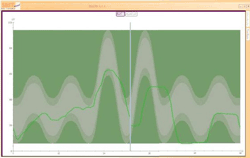 Biofeedback has proved to be a highly effective method for treating incontinence. Particularly in cases of stress urinary incontinence and urge incontinence, success rates are nearly 80% after just a few sessions.3 The method also shows high success rates in cases of anal incontinence1. Older clients can also learn this method very easily3.
The clinical success of biofeedback treatment for incontinence is significant and consistent over time (61% reduction in the severity of incontinence over a 2-year follow-up period)4. Progress in treatment can also be achieved more quickly using biofeedback than with conventional pelvic floor exercises (6 sessions compared with 12)5.
In the case of male urinary incontinence following a prostatectomy, the current evidence suggests that recovery is accelerated after surgery1.
With regular training, control over the sphincter muscle is, in theory, retained for life. This is because the participants have learnt a new skill and can now consciously apply it time and again. This control over urination enables those affected to go out in public again without worry and with a greater sense of well-being, and to finally lead a life without restrictions.

Real-world reports from users
My seven years„ experience with patients suffering from urinary and faecal incontinence has been extremely encouraging; almost all of them have benefited from biofeedback training and have seen a huge improvement in their quality of life. Biofeedback offers the best way to regain “control’ over incontinence.
„We treated women with stress, urge and mixed incontinence, pelvic floor insufficiency without urinary leakage, and faecal incontinence. The male participants were exclusively those with stress incontinence following radical prostatectomies.”. This highlighted the role of biofeedback in stress incontinence; for this condition in particular, training using vaginal probes should become the gold standard, just as it has in the United States. A clear improvement was achieved in most participants. (…) This also boosts the motivation of the participants involved, as they can see their progress each time, and provides the trainer with a useful tool for monitoring compliance. (…) Another very positive aspect of BFB training is, not least, the low number of dropouts. Only 15 participants (out of 660) dropped out of the ongoing sessions. (…)“
You can read another detailed account of the benefits of biofeedback compared with traditional pelvic floor exercises here read more.
Biofeedback for:
ADHD
Anxiety disorders
Asthma
Profession
High blood pressure
Depression
Epilepsy
Erectile dysfunction
Incontinence
Competitive sport
Raynaud's disease
PTSD
Rehabilitation
Irritable bowel syndrome
Sleep disorders
Stress & burnout
Stress diagnostics
Pain therapy
Tinnitus
Constipation
Sources:
1 Martin, A., & Rief, W. (2009). How effective is biofeedback? A therapeutic method. Bern: Huber.
2 Barnes, J., Bowman, E. P., & Cullen, J. (1984). Biofeedback as an adjunct to psychotherapy in the treatment of vaginismus. Applied Psychophysiology and Biofeedback, 9(3), 281–289.
3 McDowell, B. J., Engberg, S., Sereika, S., Donovan, N., Jubeck, M. E., Weber, E., & Engberg, R. (1999). Effectiveness of behavioural therapy for treating incontinence in homebound older adults. Journal of the American Geriatrics Society, 47(3), 309–318.
4 Dougherty, M. C., Dwyer, J. W., Pendergast, J. F., Boyington, A. R., Tomlinson, B. U., Coward, R. T., … & Rooks, L. G. (2002). A randomised trial of behavioural management for continence in older rural women. Research in Nursing & Health, 25(1), 3–13.
5 Berghmans, L. C. M., Frederiks, C. M. A., De Bie, R. A., Weil, E. H. J., Smeets, L. W. H., Van Waalwijk van Doorn, E. S. C., & Janknegt, R. A. (1996). Efficacy of biofeedback, when combined with pelvic floor muscle exercise treatment, for genuine stress incontinence. Neurourology and Urodynamics, 15(1), 37–52.