


Biofeedback for anxiety and panic attacks
Anxiety disorders are the most common group of mental illnesses, with a lifetime prevalence of up to 16.6%. These include specific phobias, panic disorders and generalised anxiety disorders, all of which are characterised by excessive anxiety and an imbalance in the autonomic nervous system.
For those affected, anxiety is a considerable burden in everyday life and often leads to massive suffering. However, conventional treatment with anxiolytics or tranquillisers harbours risks such as drug abuse and dependency and should therefore only be used as a short-term measure.
Treatment of anxiety disorders with biofeedback
In view of the proven pathological breathing patterns in people with anxiety disorders1, biofeedback therapy often focusses on teaching deep and slow abdominal breathing through Breathing biofeedback. Treatment with biofeedback should be seen as supportive training2, which teaches those affected self-competence and thus has a positive influence on the progress of treatment. More recently, the training of the Heart rate variability (i.e. the synchronicity of breathing and heartbeat) for the treatment of anxiety disorders3.
Two levels of biofeedback treatment
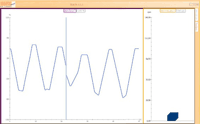 The treatment of anxiety disorders using biofeedback takes place on two levels:
- Training the ability to relax: Various biofeedback methods are used to improve the general ability to relax. This aims to lower the body's basic level of excitement and thus reduce the likelihood of anxiety occurring.
- Exposure training: During this confrontation training, anxiety-inducing content is presented using videos or images and the level of arousal is simultaneously recorded and reported back. Relaxation is promoted through breathing feedback or other biofeedback modalities with the aim of learning deep abdominal breathing. The aim is to sharpen body awareness, achieve relaxation in anxiety-inducing situations and maintain this relaxation in real stressful situations. The Biolife software makes it possible to use customised session templates to address the specific problems of those affected, for example by integrating their own videos or images for specific phobias.
Efficiency and effectiveness
Significant improvements and a marked reduction in anxiety symptoms can be seen after just 6 to 12 sessions4. Participants learn to independently reduce stress indicators such as skin conductance in anxiety-inducing situations, which leads to a significant improvement in their anxiety and avoidance behaviour. These positive effects are still detectable one year after the treatment4. Study participants also rated biofeedback as more helpful than other relaxation techniques.6
Furthermore, the training also brings about a change in the way people cope with the illness. Subjective anxiety is reduced and the willingness to confront critical situations is increased. The Evidence-Based Practice in Biofeedback and Neurofeedback study published in 2016 also labelled the treatment of anxiety disorders with biofeedback as level 4/5 „Effective“7.
Practical example from Dr Erich Gamsjäger
In her medical history, the client reports „panic attacks“ triggered by dizziness and shortness of breath. In addition, pain in her shoulder, weight loss and stress-related diarrhoea are perceived as very stressful. Even after a hospital stay, she still feels „tired and overworked“.
The client appears to have an increased - physiologically translated - readiness to experience anxiety, brooding, performance and stress. In new or demanding situations, she reacts with strong tension, especially in the shoulder and neck area. This is followed by rapid and shallow breathing and the perception of dizziness and judgement as frightening and dangerous.
Within one year and 18 units, over
- Breathing training: abdominal breathing without involving the shoulders and exhalation training
- Hand warming training using your own images and relaxation sequences
- Coherence training
- and the client's motivation
all symptoms were changed, reduced or resolved. Symptoms such as morning diarrhoea disappeared without „active“ intervention. The experience of control and self-efficacy also changed the client's behaviour, reactions and way of seeing and evaluating things.
The client was able to fend off an attack that occurred at the beginning of the treatment with the help of the methods learnt, and from this point onwards there were no more attacks of dizziness/anxiety. A sense of her own needs and a positive view of both physical and psychological symptoms were restored.
Today, the client is no longer dependent on the support of biofeedback, but occasionally uses this support to calibrate and validate her own perception and self-developed methods of relaxation.
Biofeedback for:
ADHD
Anxiety disorders
Asthma
Profession
High blood pressure
Depression
Epilepsy
Erectile dysfunction
Incontinence
Competitive sport
Raynaud's disease
PTSD
Rehabilitation
Irritable bowel syndrome
Sleep disorders
Stress & burnout
Stress diagnostics
Pain therapy
Tinnitus
Constipation
Anxiety studies in the biofeedback blog
Biofeedback for anxiety disorders - a practical experience report
Biofeedback is becoming increasingly important in modern psychotherapy. This innovative method enables therapists and patients to...
Sources:
1 Wilhelm, F. H., Gevirtz, R., & Roth, W. T. (2001). Respiratory Dysregulation in Anxiety, Functional Cardiac, and Pain Disorders: Assessment, Phenomenology, and Treatment. Behaviour Modification, 25(4), 513-545. doi: 10.1177/0145445501254003.
2 Polak, A. R., Witteveen, A. B., Denys, D., & Olff, M. (2015). Breathing biofeedback as an adjunct to exposure in cognitive behavioural therapy hastens the reduction of PTSD symptoms: a pilot study. Applied psychophysiology and biofeedback, 40(1), 25-31.
3 Ratanasiripong, P., Sverduk, K., Prince, J., & Hayashino, D. (2012). Biofeedback and counselling for stress and anxiety among college students. Journal of College Student Development, 53(5), 742-749.
4 Brauer, A. (1999). Biofeedback and Anxiety. Psychiatric Times, 16(2), 1-2.
5 Meuret, A. E., Wilhelm, F. H., Ritz, T., & Rith, W. T. (2008). Feedback of End-Tidal pCO2 as a Therapeutic Approach for Panic Disorder. Journal of Psychiatric Research, 42(7), 560-568. doi: 10.1016/j.jpsychires.2007.06.005.
6 Reiner, R. (2008). Integrating a Portable Biofeedback Device into Clinical Practice for Probands with Anxiety Disorders: Results of a Pilot Study. Applied Psychophysiology and Biofeedback, 33, 55-61. doi: 10.1007/s10484-007-9046-6.
7 G. Tan, F. Shaffer, R. Lyle, & I. Teo (Eds.). Evidence-based practice in biofeedback and neurofeedback (3rd ed.). Wheat Ridge, CO: Association for Applied Psychophysiology and Biofeedback.