


Treating depression with biofeedback
Depression is a common illness from which thousands of people suffer. Symptoms often include difficulty concentrating, a lack of joy and general exhaustion.
Treatment of depression with biofeedback
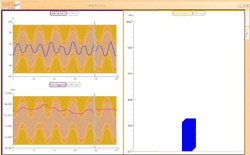 Biofeedback can support the goals of cognitive and behavioural interventions and contribute to improving self-efficacy or cognitive beliefs1.
In recent times, the HRV biofeedback has been shown to be an effective treatment for depression. This is a very intuitive method in which the patient learns to improve the responsiveness of the heart. This is done, for example, by training respiratory sinus arrhythmia. In this training, subjects learn to harmonise their breathing and heartbeat, which has a positive effect on various disorders.
Effectiveness
HRV biofeedback has been shown to be an effective treatment for depression and was given the second highest rating of „Effective“ in the Association for Applied Psychophysiology and Biofeedback's biofeedback review „Evidence-Based Practice in Biofeedback and Neurofeedback“2.
 A study using HRV biofeedback concluded that biofeedback appears to be a useful adjunctive therapy for the treatment of major depression3. Another study among students in higher education showed that after 4 weeks, biofeedback treatment had reduced the levels of stress, anxiety and depression, while the control group even recorded increases in these areas4.
In general, several studies have shown that biofeedback can have positive effects on depression. A study from Germany found that test subjects showed improved heart rate variability, reduced anxiety and a lower heart rate in addition to lower depression levels after treatment with HRV biofeedback5.
„Research shows that heart rate variability biofeedback can be helpful in the treatment of depression. It works by training and rebalancing the autonomic system of individuals, which helps the body to increase arousal when appropriate and step on the brakes when helpful. This is an important ability for self-regulation, which is usually impaired in people with depression.“6
Biofeedback for:
ADHD
Anxiety disorders
Asthma
Profession
High blood pressure
Depression
Epilepsy
Erectile dysfunction
Incontinence
Competitive sport
Raynaud's disease
PTSD
Rehabilitation
Irritable bowel syndrome
Sleep disorders
Stress & burnout
Stress diagnostics
Pain therapy
Tinnitus
Constipation
Sources:
1 Martin, A., & Rief, W. (Eds.). (2008). How effective is biofeedback: a therapeutic method. Hogrefe AG.
2 G. Tan, F. Shaffer, R. Lyle, & I. Teo (Eds.). Evidence-based practice in biofeedback and neurofeedback (3rd ed.). Wheat Ridge, CO: Association for Applied Psychophysiology and Biofeedback.
3 Karavidas, M. K., Lehrer, P. M., Vaschillo, E., Vaschillo, B., Marin, H., Buyske, S., Malinovsky, I., Radvanski, D. & Hassett, A. (2007). Preliminary Results of an Open Label Study of Heart Rate Variability Biofeedback for the Treatment of Major Depression. Applied Psychophysiology And Biofeedback, 32(1), 19-30. https://doi.org/10.1007/s10484-006-9029-z
4 Ratanasiripong, P., Kaewboonchoo, O., Ratanasiripong, N., Hanklang, S. & Chumchai, P. (2015). Biofeedback Intervention for Stress, Anxiety, and Depression among Graduate Students in Public Health Nursing. Nursing Research And Practice, 2015, 1-5. https://doi.org/10.1155/2015/160746
5 Siepmann, M., Aykac, V., Unterdörfer, J., Petrowski, K. & Mueck-Weymann, M. (2008). A Pilot Study on the Effects of Heart Rate Variability Biofeedback in Patients with Depression and in Healthy Subjects. Applied Psychophysiology And Biofeedback, 33(4), 195-201. https://doi.org/10.1007/s10484-008-9064-z
6 http://www.mnn.com/health/fitness-well-being/stories/biofeedback-and-depression-treating-the-blues-with-body-mind (accessed on 23/05/2017)