


In the world of alternative medicine and complementary therapies, many people come across the terms ‘biofeedback’ and ‘bioresonance’. Both methods promise to improve well-being by responding to the body and its signals. But what exactly distinguishes biofeedback from bioresonance? This article compares the fundamentals, applications and effectiveness of both methods to provide a clear understanding of their differences.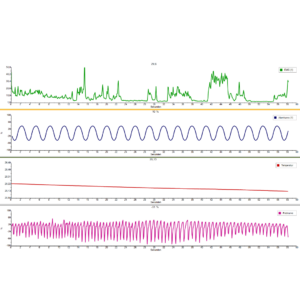
What is biofeedback?
Biofeedback is a scientifically recognised method that enables people to consciously control their body’s unconscious physiological processes. Special sensors are used to measure bodily functions such as heart rate, skin temperature, muscle tension or skin conductance, and patients receive visual or auditory feedback in real time. The aim is to use this feedback to help patients consciously influence and regulate these processes, which would otherwise occur unconsciously.
Applications of biofeedback:
Biofeedback is used in various medical and therapeutic fields, including:
- Stress management: By receiving feedback on physiological parameters, people can learn to cope better with stress and use relaxation techniques effectively.
- Pain management: Biofeedback can help to reduce the perception of pain, particularly in cases of chronic pain.
- Treatment of anxiety disorders: Patients learn to reduce their anxiety reactions by consciously controlling their breathing and heart rate.
- Migraines and headaches: Biofeedback can reduce the frequency and intensity of headaches by helping to relieve muscle tension and stress.
The scientific basis of biofeedback:
Biofeedback has been extensively researched and its effectiveness confirmed in numerous studies. It is based on the principle of operant conditioning, whereby the feedback system can influence unconscious bodily processes. Various Meta-analyses and clinical trials have confirmed the effectiveness of biofeedback, particularly in the treatment of anxiety disorders and chronic pain.
What is bioresonance?
Bioresonance is an alternative form of therapy based on the principle that the body emits and receives electromagnetic vibrations. Bioresonance therapists believe that illnesses and ailments are caused by disturbed vibrations within the body. The therapy aims to correct these disturbances by applying specific frequencies, thereby restoring the body’s natural balance.
Applications of bioresonance:
Bioresonance is used in many fields, including:
- Allergy treatment: Proponents claim that bioresonance can alleviate allergies by harmonising the body’s own vibrations.
- Pain relief: It is claimed that bioresonance can reduce chronic pain.
- Detoxification: Bioresonance is said to cleanse the body of toxins and support the metabolism.
- Treatment of chronic conditions: Some users employ bioresonance to provide relief from chronic conditions such as asthma, rheumatism or skin conditions.
The scientific basis of bioresonance:
Unlike biofeedback, there is very little scientific evidence to support bioresonance. Many studies designed to investigate the effectiveness of bioresonance have concluded that there is no scientific evidence for the claimed effects. The method is based on theories that are largely rejected by the scientific community. Bioresonance is often described as pseudoscientific and is not recognised as a medical therapy in many countries.
Biofeedback and Bioresonance – An Overview of the Key Differences
- Scientific basis:
- Biofeedback: Well-researched, scientifically recognised and widely used in clinical practice.
- Bioresonance: Little to no scientific basis; largely rooted in alternative medicine and viewed with scepticism by the scientific community.
- How it works:
- Biofeedback: It measures actual physiological parameters and provides this information in real time to promote conscious control.
- Bioresonance: Based on the concept of electromagnetic vibrations which are claimed to affect health, even though there are no scientifically verifiable measurements of these vibrations.
- Applications:
- Biofeedback: A wide range of applications in the treatment of stress, anxiety, pain and psychosomatic disorders.
- Bioresonance: Frequently used in alternative medicine to treat a wide range of conditions, but its effectiveness is disputed.
- Objective:
- Biofeedback: The aim is to enable patients to consciously regulate their physiological processes and thereby improve their health.
- Bioresonance: Aims to restore the body’s natural balance by correcting vibrations, without providing a clear, scientifically sound explanation of the mechanism involved.
Conclusion: Which approach is the right one?
Whilst biofeedback is an established method with proven effectiveness that is used in various medical and therapeutic fields, bioresonance remains a controversial form of therapy with little scientific support. Patients seeking alternative treatments should be aware of the differences between these two methods and, in particular, take into account the scientific basis of each therapy.
You can find experienced biofeedback therapists here.
Sources:
- Lehrer, P. M., & Woolfolk, R. L. (2021). Principles and Practice of Stress Management. Guilford Press.
- Moss, D., McGrady, A., Davies, T. C., & Wickramasekera, I. (2003). Handbook of Mind-Body Medicine for Primary Care. SAGE Publications.
- Litscher, G. (2009). Biofeedback and Neurofeedback: Applications and Implications for Neurological Rehabilitation. Springer.
- Ernst, E., & Pittler, M. H. (2001). Efficacy of Homeopathic Arnica: A Systematic Review of Placebo-Controlled Clinical Trials. CMAJ: Canadian Medical Association Journal, 172(6), 777–783.
- Schmidt, S., & Walach, H. (2000). Bioresonance therapy – how it works and scientific evaluation. Springer.
- Hawkins, M. (2020). Biofeedback and Bioresonance: An Evidence-Based Comparison. Journal of Alternative Medicine, 14(3), 233–242.
- Smith, L. M., & Jones, R. (2019). Biofeedback vs. Bioresonance: The Science Behind the Therapies. Journal of Medical Science, 17(4), 89–95.




0 Comments