


Mental health disorders are among the most common conditions worldwide and are the leading cause of health impairment. According to estimates from the Global Burden of Disease Study 2023, published in the specialist journal *The Lancet*, the number of people affected by mental health conditions worldwide stood at 1.17 billion in 2023 – almost twice as many as in 1990. This corresponds to a prevalence rate of 14.2 per cent: one in seven people is affected. The study also shows that women are affected more frequently than men, and that young people aged between 15 and 19 suffer from mental disorders particularly frequently.
These figures highlight the urgent need for effective methods for the treatment and prevention of mental health problems. Biofeedback and Neurofeedback offer an innovative, well-researched approach to supporting those affected and strengthening mental health in the long term.
How can biofeedback and neurofeedback help with mental health issues?
Early detection & prevention
The benefits of biofeedback and neurofeedback begin with early detection and prevention. The method is suitable, for example, for identifying pathological stress patterns: as part of biofeedback diagnostics, short-term physiological responses to specific stressors are measured – such as heart rate, skin conductance and muscle activity. These data allow initial patterns in the body’s stress response to be identified.
Another important aspect is the recovery phase – that is, the period of time the body needs to return to its normal state following a stressful situation. Its duration can provide insight into stress resilience and the ability to cope with stress, and helps to identify stress-related pressures at work and in everyday life at an early stage.
Biofeedback and neurofeedback not only enable early detection, but also targeted prevention: through real-time feedback on physiological parameters such as heart rate, skin conductance, muscle tension or brain activity, those affected learn to better recognise and regulate their physical responses to stress or emotional strain.
Studies have demonstrated the effectiveness of biofeedback in the prevention and treatment of stress and burnout: after 4–5 weeks of training, symptoms of stress, anxiety and depression can be reduced (Sutarto et al., 2012; Ratanasiripong et al., 2015). Biofeedback can also be used to combat everyday stress (Kotozaki et al., 2014) and to increase stress tolerance (Jarašiūnaitė-Fedosejeva et al., 2015) – and can thus form a key component in the prevention of mental health conditions.
Would you like to use biofeedback in your practice?
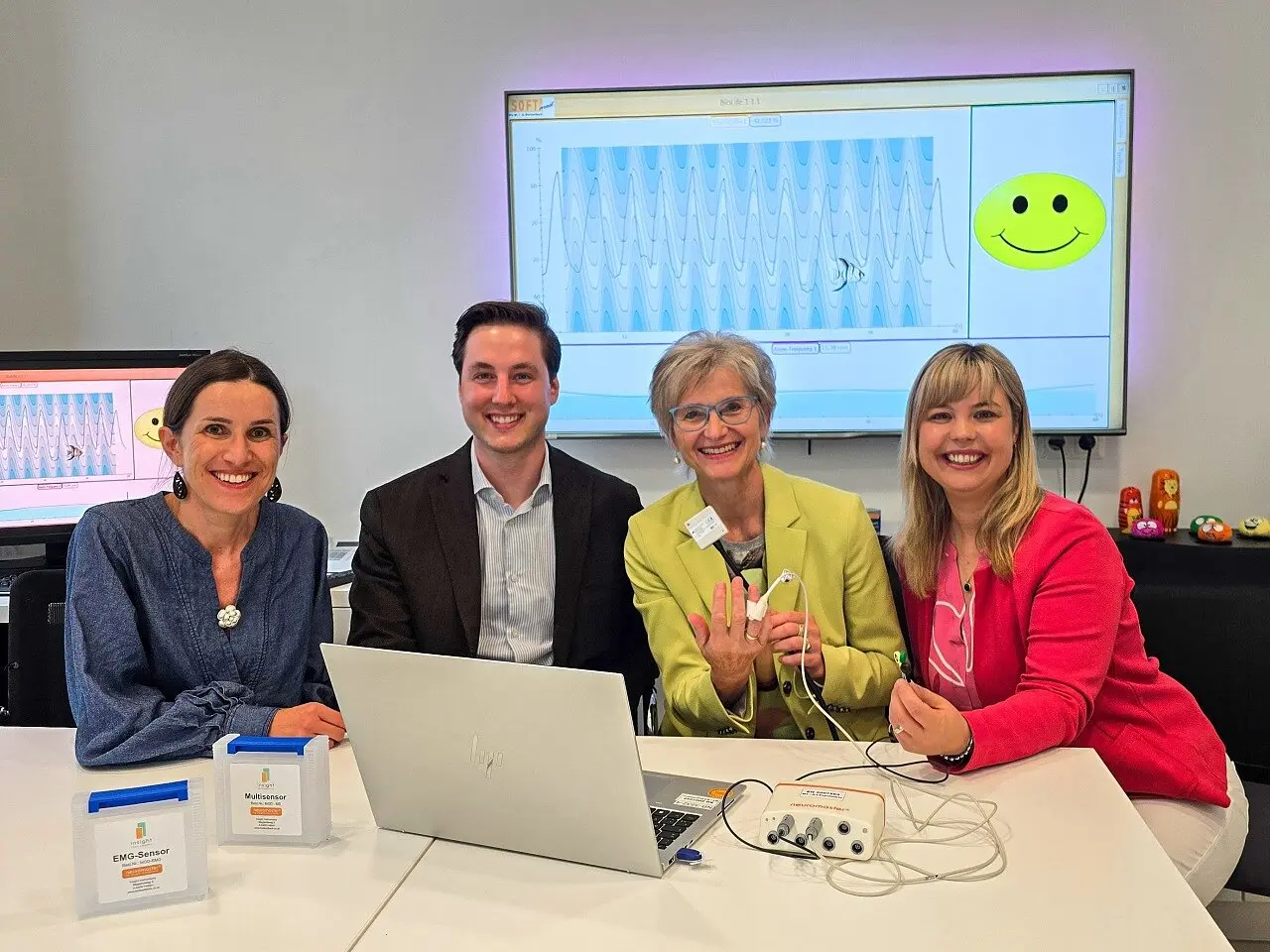
The Neuromaster enables the precise measurement and training of HRV, skin conductance, muscle tension and respiration – combining prevention and therapy in a single device.
Neurofeedback in the treatment of ADHD

Biofeedback and neurofeedback can be used not only for prevention but also as a therapeutic approach to treat existing mental health conditions.
It is particularly effective and specific Neurofeedback in the treatment of ADHD in children and adults as part of a comprehensive treatment programme, as numerous studies have shown (Bussalb et al., 2019; Sidiropoulos, 2023; Van Doren et al., 2019).
People with ADHD often exhibit imbalances in certain brainwave patterns. Through targeted neurofeedback training, those affected learn to correct these imbalances and reduce symptoms such as hyperactivity and inattention. When combined with other forms of therapy, such as behavioural therapy or occupational therapy, neurofeedback has been shown to be particularly effective.
Biofeedback in the treatment of depression
As an effective Treatment methods for depression HRV biofeedback has proved particularly effective (Karavidas et al., 2007). This is an intuitive method for improving the heart’s responsiveness – for example, by training respiratory sinus arrhythmia. Clients learn to synchronise their breathing with their heartbeat, which can have a positive effect on depressive disorders and various other conditions (Caldwell & Steffen, 2018).
Anxiety disorders are among the most common mental health conditions. These include specific phobias, panic disorders and generalised anxiety disorders, all of which are characterised by excessive anxiety and an imbalance in the autonomic nervous system. Biofeedback-assisted breathing training, in which patients learn deep abdominal breathing, is frequently used. HRV biofeedback can also be used to develop a fundamental ability to relax and to strengthen self-efficacy. In addition to general relaxation training, biofeedback can also be used to help patients confront anxiety-inducing stimuli.
Study participants learnt to reduce stress indicators independently in anxiety-inducing situations – a significant improvement and reduction in anxiety symptoms were observed after just six to twelve biofeedback sessions (Brauer, 1999), which was still detectable one year after treatment. A study by Ratanasiripong et al. (2015) found a reduction in anxiety symptoms after just four weeks of biofeedback intervention. Study participants also rated biofeedback as more helpful than other relaxation techniques (Reiner, 2008).
Biofeedback for sleep disorders
Sleep disorders are both a concomitant symptom and a risk factor for various mental and physical illnesses. Treatment using biofeedback is based on the assumption that people with sleep problems exhibit an elevated level of physiological, cognitive and/or emotional arousal. During training, patients usually learn to keep a sleep diary or follow a sleep ritual in order to reduce their arousal levels and thus improve the quality of their sleep – for example, through respiratory biofeedback, hand-warming exercises or EMG biofeedback, to achieve a state of relaxation before falling asleep.
Studies have shown that biofeedback-based training is just as effective as alternative treatment methods, including medication, but can lead to long-term, lasting effects (Martin & Rief, 2009; Riemann & Perlis, 2009).
Conclusion: Biofeedback as a cornerstone of modern mental health care
Given the rising global incidence of mental health conditions, there is an urgent need for innovative and effective approaches to prevention and treatment. Biofeedback and neurofeedback offer promising possibilities in this regard: they enable individuals to consciously perceive and specifically regulate physiological processes. For psychologists, psychotherapists, occupational therapists and doctors, biofeedback and neurofeedback represent a valuable addition to the range of treatments available; they are free from side effects and can be tailored to the individual needs of patients. It is important that the therapy is carried out by qualified professionals to ensure the best possible outcomes.
Biofeedback and neurofeedback are therefore valuable components of a modern, holistic approach to promoting mental health – both preventatively and therapeutically.
Become a certified biofeedback therapist
The European Biofeedback Academy, in collaboration with Sigmund Freud Private University Vienna, provides university-level training in biofeedback and neurofeedback.
Frequently asked questions about biofeedback and neurofeedback
Has the effectiveness of biofeedback been scientifically proven?
Yes. Numerous studies show positive effects on stress, anxiety, depression, sleep disorders and ADHD – the relevant sources are listed at the end of this article.
How many sessions are needed before improvements become apparent?
Studies show that the first measurable effects can sometimes be observed after just four to five weeks or six to twelve sessions – depending on the symptoms and the treatment method.
Can biofeedback replace treatment with medication?
Biofeedback is generally used alongside other forms of therapy and should be incorporated into an individualised treatment plan by qualified professionals.
Who can benefit from neurofeedback for ADHD?
Neurofeedback is used for children and adults with ADHD as part of a comprehensive treatment programme, often in combination with behavioural therapy or occupational therapy.
This article is intended for general information purposes only and is not a substitute for individual diagnosis or treatment by qualified professionals.
Sources
Brauer, A. (1999). Biofeedback and Anxiety. Psychiatric Times, 16(2), 1–2.
Bussalb, A., Congedo, M., Barthélemy, Q., Ojeda, D., Acquaviva, E., Delorme, R., & Mayaud, L. (2019). Clinical and experimental factors influencing the efficacy of neurofeedback in ADHD: a meta-analysis. Frontiers in Psychiatry, 10, 35.
Caldwell, Y. T., & Steffen, P. R. (2018). Adding HRV biofeedback to psychotherapy increases heart rate variability and improves the treatment of major depressive disorder. International Journal of Psychophysiology, 131, 96–101.
Jarašiūnaitė-Fedosejeva, G., Perminas, A., Gustainienė, L., Pečiulienė, I., & Kavaliauskaitė, R. (2015). Biofeedback-assisted relaxation and progressive muscle relaxation: their potential for enhancing students‘ distress tolerance. European Scientific Journal, 11(2).
Karavidas, M. K., Lehrer, P. M., Vaschillo, E., Vaschillo, B., Marin, H., Buyske, S., Malinovsky, I., Radvanski, D. & Hassett, A. (2007). Preliminary Results of an Open Label Study of Heart Rate Variability Biofeedback for the Treatment of Major Depression. Applied Psychophysiology and Biofeedback, 32(1), 19-30.
Kotozaki, Y., Takeuchi, H., Sekiguchi, A., Yamamoto, Y., Shinada, T., Araki, T., Takahashi, K., Taki, Y., Ogino, T., Kiguchi, M. & Kawashima, R. (2014). Biofeedback-based training for stress management in daily hassles: an intervention study. Brain and Behaviour, 4(4), 566-579.
Martin, A., & Rief, W. (2009). How effective is biofeedback? A therapeutic method. Bern: Huber.
Ratanasiripong, P., Kaewboonchoo, O., Ratanasiripong, N., Hanklang, S. & Chumchai, P. (2015). Biofeedback Intervention for Stress, Anxiety, and Depression among Graduate Students in Public Health Nursing. Nursing Research and Practice, 2015, 1-5.
Reiner, R. (2008). Integrating a Portable Biofeedback Device into Clinical Practice for Patients with Anxiety Disorders: Results of a Pilot Study. Applied Psychophysiology and Biofeedback, 33, 55–61.
Riemann, D., & Perlis, M. L. (2009). The treatment of chronic insomnia: a review of benzodiazepine receptor agonists and psychological and behavioural therapies. Sleep Medicine Reviews, 13(3), 205–214.
Santomauro, D., Miller, P., Shadid, J. et al. Updated trends in the global prevalence and burden of mental disorders, 1990–2023: a systematic analysis for the Global Burden of Disease Study 2023. The Lancet, 407, 2040–2064.
Sidiropoulos, K. (Ed.). (2023). EEG Neurofeedback for ADD and ADHD: Innovative Treatment for Children, Adolescents and Adults. Springer.
Sutarto, A. P., Wahab, M. N. A. & Zin, N. M. (2012). Resonant Breathing Biofeedback Training for Stress Reduction Among Manufacturing Operators. International Journal of Occupational Safety and Ergonomics, 18(4), 549-561.
Van Doren, J., Arns, M., Heinrich, H., Vollebregt, M. A., Strehl, U., & Loo, S. K. (2019). Sustained effects of neurofeedback in ADHD: a systematic review and meta-analysis. European Child & Adolescent Psychiatry, 28(3), 293–305.



0 Comments