


Question: What is particularly important to you when working with tinnitus patients?
Answer: In addition to an appreciative, serious attitude towards patients, it is particularly important to me to strengthen their self-efficacy. Biofeedback - and neurofeedback - is a key tool for me because it can have a very rapid effect. Biofeedback offers patients an opportunity for self-regulation, especially in cases of overexcitement such as aggression, frustration or insomnia. They experience relief because they are no longer helplessly at the mercy of what is happening inside them. This is why it has become an indispensable part of tinnitus therapy for me.
Question: In your experience, what other complaints do tinnitus patients describe for which biofeedback can have a supportive effect and make treatment easier? And what changes do you see when patients are supported over several weeks?
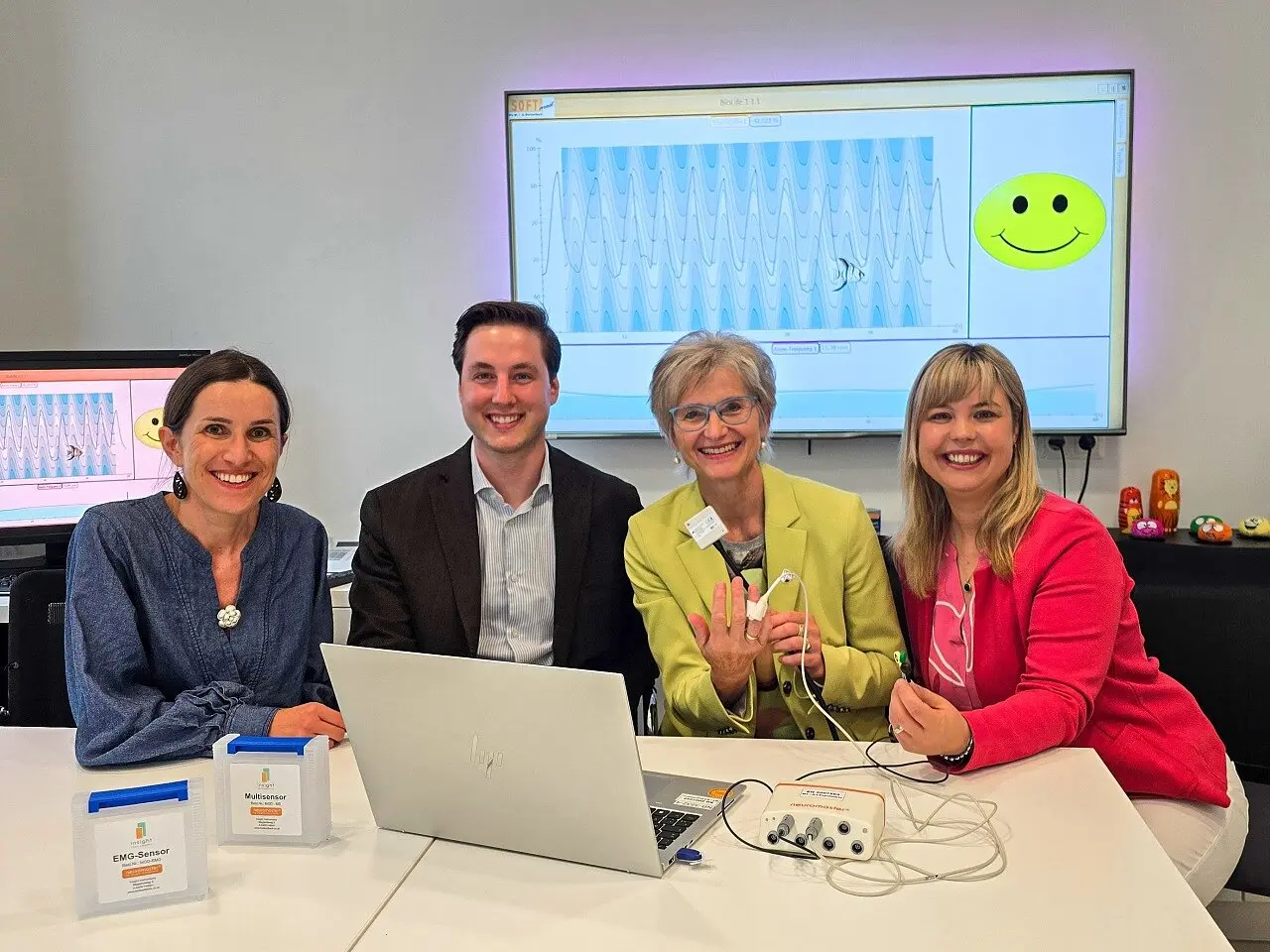
Answer: What I have noticed over the years is that many patients have a very high level of muscular tension. Especially in the areas of the trapezius muscle, the jaw muscle and also the long neck muscle. Here I particularly recommend EMG training, e.g. with the session library Easy-Start, in which the muscle tension is clearly visible. I also like to work with the EMG speedometer. Another important starting point is breathing. Many tinnitus sufferers exhibit shallow chest breathing, often associated with muscular involvement of the muscle groups affected. Learning deep, relaxed abdominal breathing without muscle involvement is therefore a central goal in training - and at the same time a good indication of the relaxation of the entire system.
Question: This means that parameters such as muscle tension, breathing and those that map the stress level and the balance between the sympathetic and parasympathetic nervous system are well suited for use in tinnitus treatment. Depending on the individual symptoms and what patients report, a suitable training protocol can be derived from this. What challenges or limitations do you experience?
Answer: One of the biggest challenges is the high level of expectation among many patients - especially if the tinnitus is still relatively new. Many come with the idea: „The tinnitus has to go, and quickly!“ They often believe that the noise must improve within three months, otherwise it will stay forever. This urgency creates additional stress, which can intensify the perception of the tinnitus, which in turn triggers more stress. The result is a vicious circle. In other words, the important thing is to learn, with acceptance training, to take the tinnitus for what it is, namely a ringing in the ears and nothing more. Patients need to understand that tinnitus is first and foremost a symptom, not the disease itself. And that it is possible to live with the noise, to integrate it, even if it does not disappear.
Biofeedback is a central element in tinnitus therapy. I wouldn't want to do without it any more because it's a good way of demonstrating self-efficacy and people get an insight into their bodies and don't feel helplessly exposed to their own bodies. This means they learn clearly what they need to do to ensure that certain parameters develop in certain and desired directions. Biofeedback has become an indispensable tool for me here.



0 Comments