


Biofeedback At first glance, the exercises seem like a game – but behind the flower or the relaxation video lies scientifically sound feedback. The method helps you to consciously control unconscious bodily processes – using simple yet effective feedback modes. In this article, we explain what biofeedback looks like in practice, the physiological principles behind it, and how different feedback modes can be used for stress reduction, therapy or self-regulation.
What is biofeedback? The science behind the exercises
Biofeedback is an evidence-based method in which bodily signals such as heart rate, breathing, muscle tension or skin conductance are measured and fed back in real time. Through this direct feedback, users learn to consciously control unconscious processes – thereby reducing stress, alleviating pain or improving concentration.
How does biofeedback work?
- Measurement: Sensors record physiological data (e.g. HRV = heart rate variability).
- Processing: Biofeedback software converts the data into meaningful signals.
- Feedback: The user receives visual, auditory or tactile feedback – and adjusts their behaviour accordingly.
Scientific background:
Biofeedback utilises the principle of operant conditioning: through positive reinforcement (e.g. a flower opening), desired behaviours (e.g. deep breathing) are automatically reinforced. Studies have demonstrated its effectiveness in, amongst other things:
- Stress and Anxiety disorders
- Chronic pain
- ADHD and concentration difficulties
- High blood pressure and Migraine
3 practical feedback methods – this is what biofeedback can look like

The Flower: Playful visual feedback
How the biofeedback flower works:
One virtual flower on the screen responds to Body language. The more relaxed you are, the more the flower blooms. When tension is applied, it closes again.
What’s behind it:
The flower is depicted a state of relaxation – without having to understand complex data. It is a intuitive tool, in order to Learning self-regulation.
Advantages:
- Simple and clear – ideal for all age groups
- Motivating (the flower as a visible sign of success)
- Versatile (e.g. for breathing exercises, stress relief or mindfulness
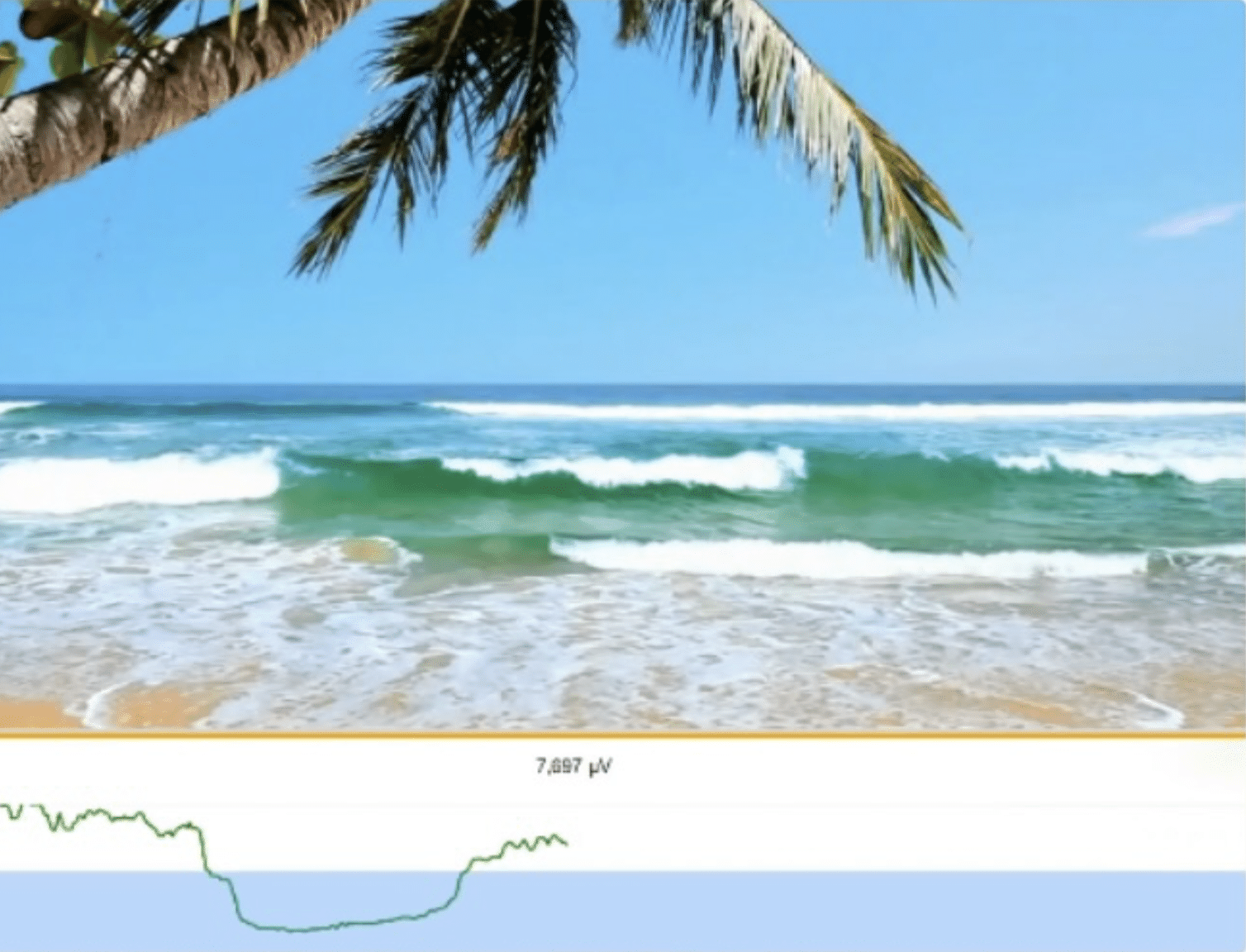
Threshold training: Immersion through visual feedback
How threshold training works:
A soothing video (e.g. a natural landscape or a beach) is played only when you’re relaxing. If patients’ stress levels rise, pause the video. Playback only resumes once the button is released again.
What’s behind it:
The video creates a immersive experience, the patients „draws you into“ a state of relaxation“. Through direct feedback, they learn to, what relaxation feels like – and how they can actively bring them about.
Benefits for treatment:
- Promotes deep relaxation through visual and emotional stimulation
- Reduces distraction (Focusing on the video = focusing on your own body)
- Versatile (e.g. in therapy, at home or in relaxation groups
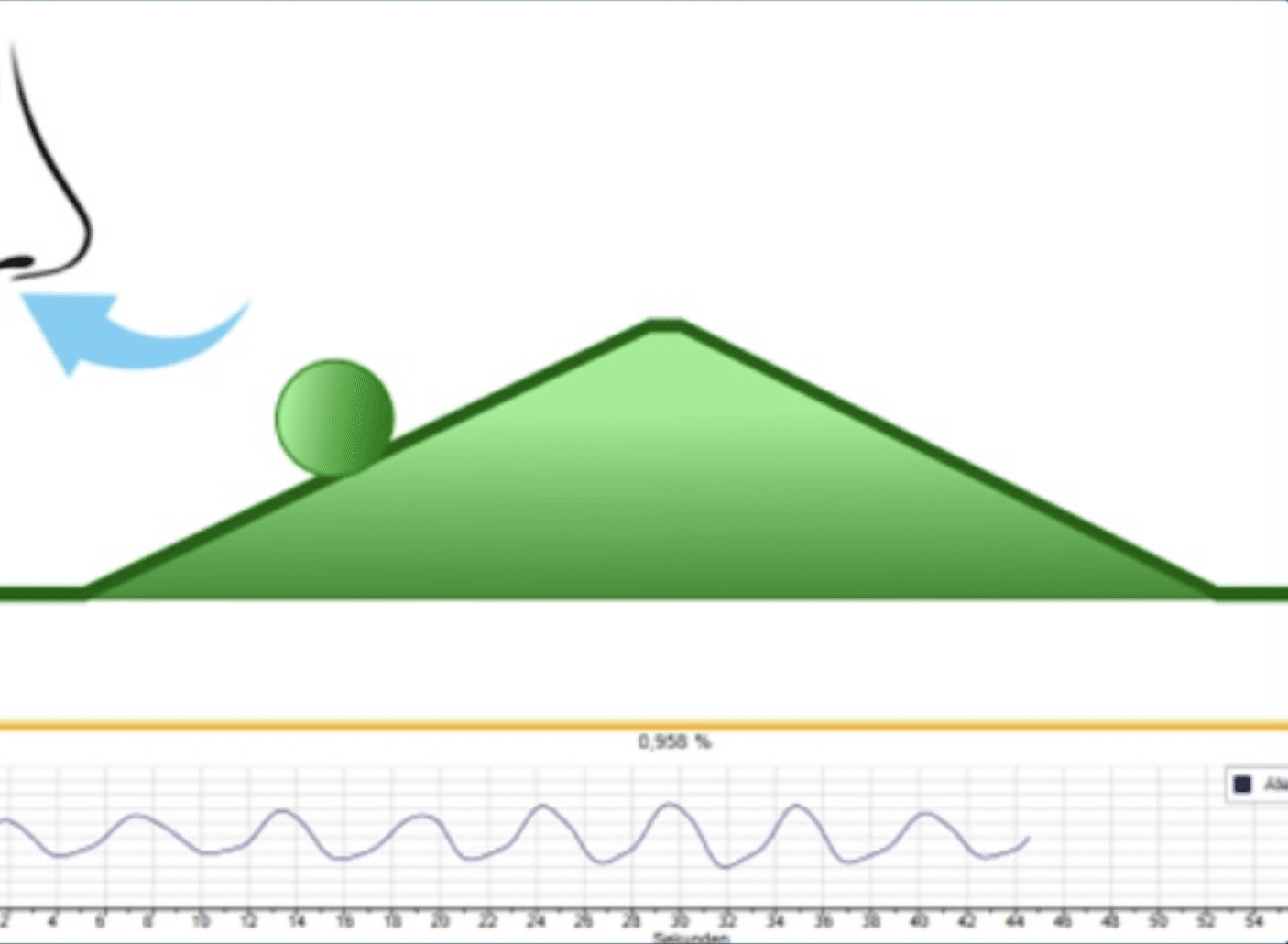
Breathing animation: Consciously controlling your breathing
How the breathing animation works:
One animated sphere moves across the screen up and down and thus provides a Ideal breathing before.
- The ball moves upwards → Patients should breathe in.
- The ball moves downwards → Patients should breathe out.
At the same time, the patients’ real-time breathing curve is displayed, allowing them to see how closely they are following the ideal breathing pattern.
What’s behind it:
Breath pacing combined with Feedback:
- The Ball animation gives the Rhythm first (e.g. breathe in for 6 seconds, breathe out for 6 seconds).
- The Real-time breathing curve shows how well the patients to follow the ideal breathing pattern.
- This helps to develop a deep, steady and controlled breathing.
Benefits for treatment:
- Clear pacing for targeted breathing exercises
- Direct feedback via the real-time breathing line
- Scientifically sound (Breathing rate and depth are measurable parameters
Conclusion: Use feedback modes on an individual basis
The feedback modes presented here show how diverse Biofeedback can be used in therapy. Each mode has its one’s own strengths and is suitable for different groups of patients and treatment objectives.
Practical tip:
Many biofeedback systems – such as ours, for example BioLife software offer flexible options, to use these modes to customise and mix and match. This allows you to tailor the method perfectly to your patients’ needs.



0 Comments