


Autogenic training is a tried-and-tested method of autonomic relaxation used in the treatment of a wide range of conditions such as Asthma, Anxiety disorders, Depression and Tension headaches can be used. Combining it with biofeedback can significantly improve the effectiveness of this method and the speed at which it is learnt.

The principle of autogenic training
Autogenic training was developed by the psychiatrist Johannes Heinrich Schultz and is based on autosuggestion to achieve a state of deep relaxation. The method uses standardised phrases that are repeated to trigger physiological relaxation responses such as a sensation of warmth, a feeling of heaviness or slower breathing. These techniques aim to calm the autonomic nervous system and heighten awareness of one’s own bodily sensations.
Combination: Autogenic training and biofeedback
When starting autogenic training, many people find it difficult to perceive the subtle changes in their bodies that are associated with relaxation processes. This can lead to a lack of confidence in their own ability to relax and undermine their motivation to continue with the training. By integrating biofeedback into the training, participants find it easier to observe their progress directly, which strengthens their confidence in the method and accelerates the learning process.
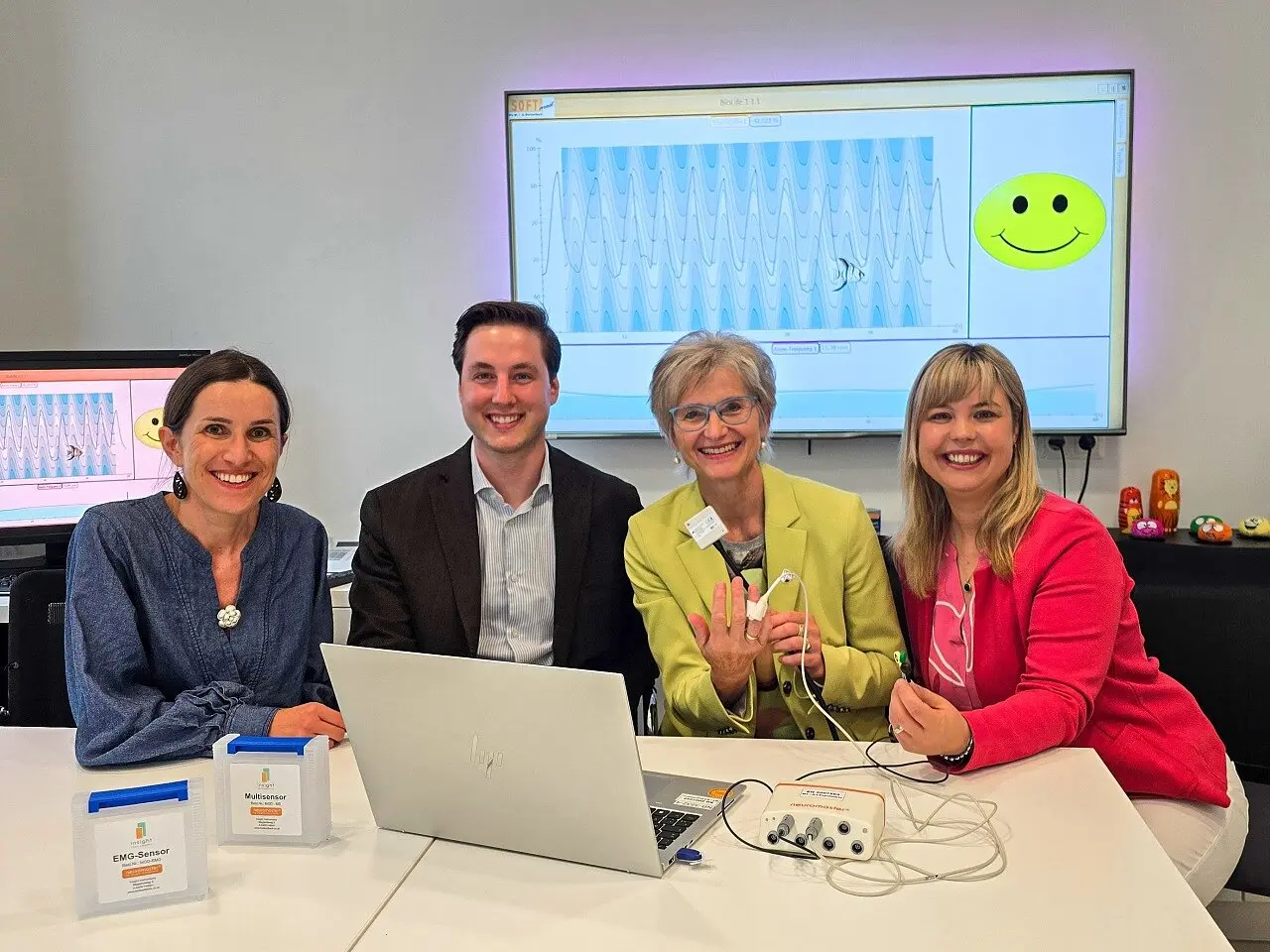
- Biofeedback as an enhancer: Biofeedback devices record and visualise physiological parameters such as peripheral temperature, heart rate, muscle tension, respiration and skin conductance. During the autogenic training exercises, clients receive immediate feedback on how the relaxation exercises are affecting their bodies. For example, it becomes apparent whether the hand is actually warming up or whether the pulse rate is falling, which confirms the effectiveness of the relaxation techniques.
- Motivation through visibility: This immediate feedback is particularly helpful for clients who are sceptical about the method or who feel under pressure to succeed. Visualising physical reactions builds confidence in the technique and motivates clients to continue with the training consistently. This feedback is particularly valuable in ensuring the success of the training and enabling clients to learn the method more effectively.
Treatment procedure
Combining autogenic training with biofeedback has proved particularly effective in enhancing the positive effects of this relaxation method. The visible confirmation that the autogenic suggestions actually lead to measurable physiological changes gives participants the reassurance they need that they are on the right track. This not only boosts motivation but also encourages them to apply the method independently in their everyday lives.
Sources
Schultz, J. H. (2003). Autogenic training: concentrated self-relaxation ; An attempt at a clinical and practical presentation. Georg Thieme Verlag.
Yucha, C. B. & Montgomery, D. (2008). Evidence-based practice in biofeedback and neurofeedback.
Kanji, N., White, A. & Ernst, E. (2006). Autogenic training to reduce anxiety in nursing students: a randomised controlled trial. Journal of Advanced Nursing, 53(6), 729–735.



0 Comments