


Peak Performance – What does this have to do with biofeedback?
The „Peak Performance“ application area describes the use of biofeedback and neurofeedback to enhance performance in healthy individuals, particularly athletes. This is distinct from rehabilitation, in which people recover their original level of performance following an injury or other health issues.
The use of biofeedback and neurofeedback to enhance performance is particularly interesting, as it enables performance to be measured objectively and improved. However, this training does not appear to have a direct effect on sporting performance, but rather on self-regulatory abilities, such as physiological arousal and the stress response. Studies also suggest that reduced anxiety and increased self-confidence, brought about by biofeedback, play a role in enhancing performance.
Research on Biofeedback
The body of evidence in this field has grown in recent years, driven primarily by increased use, improved algorithms and simpler data storage.
The The Association for Applied Psychophysiology and Biofeedback (AAPB) therefore assesses in its 2023 review the scientific evidence for biofeedback in performance enhancement as „effective“. The literature cited in this regard identifies, above all, HRV training and respiratory biofeedback as effective methods.
Randomised controlled trials show a wide range of improvements attributable to biofeedback.
These include:
- Reduced anxiety
- Improved cognitive performance
- Improved academic performance
- Increased self-confidence
- Improved Physiological Markers
- Improved sporting performance
Whilst there is a clear link between biofeedback and improved performance, there are still some ambiguities in the literature. A large number of variables have been investigated, but only a few of these have been included in multiple studies. Performance variables, in particular, have been measured too infrequently to date. Future research should also investigate the minimum amount of training required and whether a combination of certain biofeedback parameters is particularly effective.
Research on Neurofeedback
Based on the current body of research, the AAPB has classified the use of neurofeedback to enhance performance as „likely to be effective“.
Unlike with biofeedback, neurofeedback reveals a clear difference in the EEG signal between novices and experts.
Here, too, studies show improvements in various parameters:
- Improved sporting performance
- Improved task execution
- Experience more flow
- Improved balance
The main limitation in this area of research is the inconsistency of the neurofeedback protocols used, in which a wide variety of frequency bands are trained using different sensor placements over periods of very varying lengths. Furthermore, there is a lack of well-designed, randomised studies with large sample sizes.
Practical application
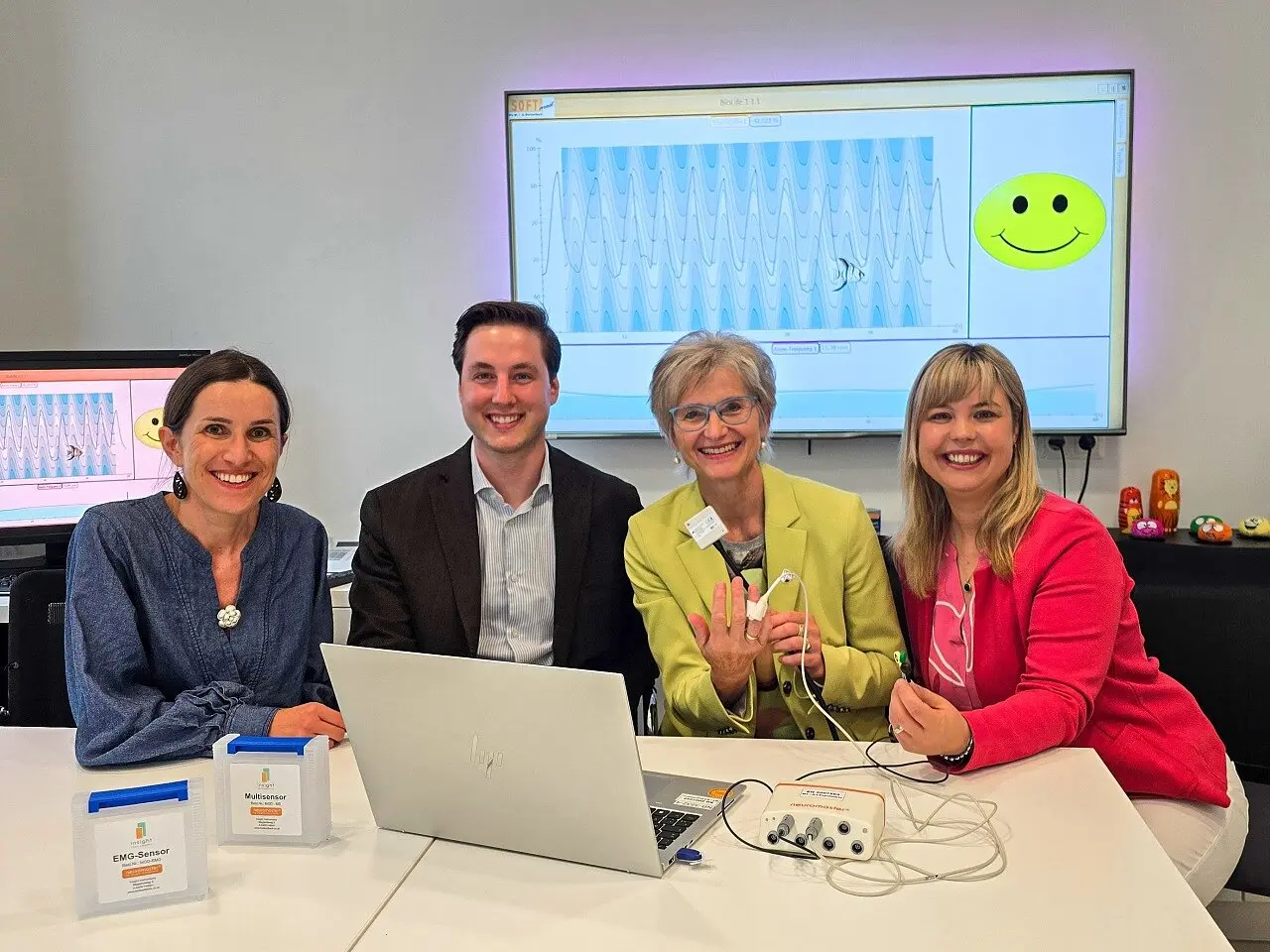
But what has been the experience of actually applying this in practice? The sports psychologist, Ms Mag. Theresa Hornich, MSc, explains in Your testimonial an insight into your work with biofeedback.



0 Comments